Showing posts with label COVID-19. Show all posts

Saturday, 18 September 2021

Viking Boat Burn, Butser Ancient Farm

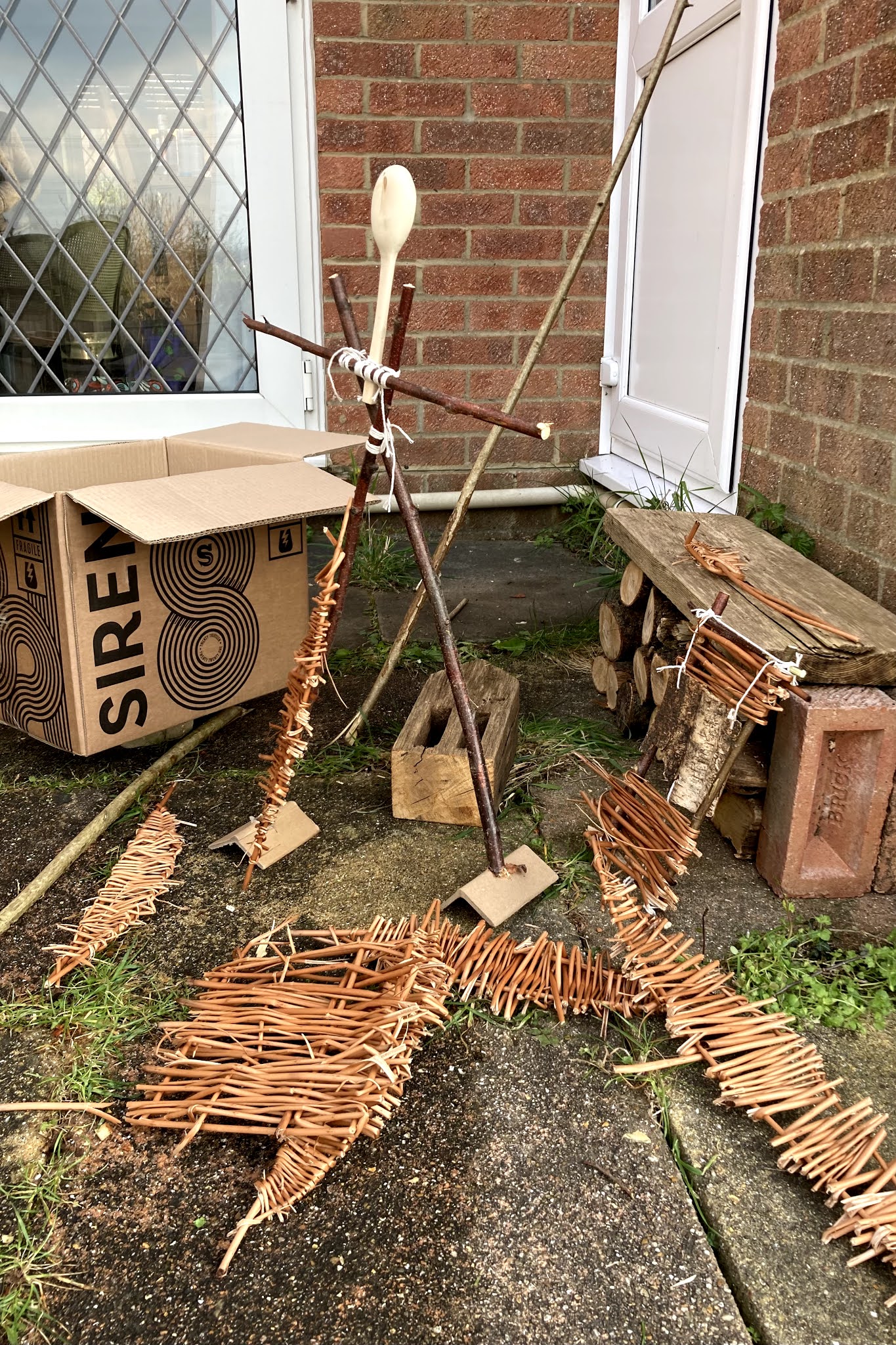
The Farm missed out on two important annual fundraising events – via the Beltain Wickerman Burning – due to Covid restrictions and ongoing Covid concerns. They have bounced back with a Viking Longship Burning event, to celebrate the coming Autumn Equinox.

The event was smaller than usual in numbers present, and subsequently had the more relaxed feel of those early Beltain events that we have previously enjoyed.

The warm up act to the boat burning were a three-piece band called Seidrblot, whose throat-singing was amazing, as were the sounds that they generated from their "ancient" instruments.

As with the more recent Beltain celebrations, the Pentacle Drummers – provided a rhythmic soundtrack to the burning ritual. Unlike at the Wickerman burning, their persistent drumming felt more in keeping with the nature of this ceremony – their hairy visages, a facsimile of the warrior spirits they so always desperately seem to be trying to channel.


Thursday, 20 May 2021

the Outer Hebrides Road Trip pt. 4 .. South Uist and Benbecula

Yesterday we explored the two largest lochs on South Uist - Loch Baghasdall and Loch Aineort - both of which are really good birdwatching sites. We also enjoyed our - first of the trip - sightings of both white-tailed eagle and otter; key target species for any Hebridean wildlife watching.

Loch Ainenott provided cracking views of a pair of otter - straight out from the parking area at the end of the road. The pair were hauled out on seaweed, and seemingly oblivious to the increased attention they were getting from the half a dozen wildlife watchers who lined the edge of the car park with 'scopes and bins. We would have all overlooked them, if it was not for A's keen eye - as I along with the rest of the motley crew were too busy trading notes on the whereabouts of "the grail" of the Outer Hebrides - the very "hush hush" breeding grounds of the red-necked phalarope.

It was a useful conversation to have, and I came away with an X marks the spot on the OS map, and the name of a second location too. The former transpired to be incorrect gen. a misremembered hand me down which looked very similar in location to the latter - but was several road junctions north from the real "hush hush".

Otter, Loch Aineott, (digi'scoped)

With the matter of the phalarope completed, we turned our attention to the birdlife and enjoyed close in views of red-throated, black-throated, and great northern diver. Along with mallard, shelduck, and wigeon; red-breasted merganser, shag and cormorant; black guillemot, arctic and common tern; grey heron.

Walking east through the plantation and out onto the open slopes of the loch side we added a pair of cuckoo, the female heard "bubbling" in response to the males call. The songs of the willow warbler, wood warbler and blackcap were also joined by the song of the scarcer Lesser whitethroat. Blackbird, robin, wren and chaffinch were in fine voice; and a goldcrest sang from the dense cover of a conifer.

When we had first arrived at the head of the loch - a very distant white-tailed eagle had been seen briefly, coming off the cliff-top and heading out over east. So when we found ourselves opposite the same cliff, we sat path side and waited a while. Shortly after sitting down, I picked up on an adult WTE flying across the face of the cliff before it zig-zagged to turn and land on a rock platform part way down the face. Too distant even to attempt a digi-scoped record shot, I took simple pleasure in sketching a schemata for posterity in my field notes.

Back at the campsite that evening, a dram or two of Skye's finest was raised aloft to toast the days sightings. As the sun dropped in a pink sky, snipe drummed overhead, and the continuous "Crex crex" of the corncrake was stifled by distance - providing a good omen for an undisturbed night's sleep.

"Slainte m'hath"

Sunset, West Kilbride

This morning we began the next stage of our road trip, slowly heading north to Benbecula. En route we enjoyed the trips first sighting of hen harrier, a smart male flying low, close in and parallel to the road.

Stopping at Cladh Hallan we visited the three roundhouse remains on a site that has been dated from the Late Bronze Age / Early Iron Age. One of the houses is considered to have been almost continually occupied for a period of 900yrs (On-site Interpretation). Foundation burials, cremations and mummified bodies have all been discovered during archaeological investigations of the site. Of the mummified bodies, it is understood that the male was a composite human, comprising the skull, jaw bone and body of three seperate individuals - who had lived at seperate times and had then been buried as a single entity, following a period of mummification in a peat bog (On-site interpretation).
Cladh Hallan roundhouses (looking north)

Cladh Hallan roundhouses (looking south)

rems. of "smokery" (looking southwest)

Taking the opportunity for a walk along the longest of sandy beaches, we followed the tideline picking up interesting shells, and collecting sea glass. Flocks of sanderling, dunlin and turnstone contrived their own beachcombing, searching between the seaweed and the waves for tiny morsels. Oystercatcher and lapwing called from the machair.

Our next stop was Loch Druidibeag - for waterbirds, wildfowl and birds of prey. Golden plover, a pair of red-necked divers; and a female hen harrier brought interest in what was an otherwise quiet birdwatch. The highlight a distant white-tailed eagle set against the sky before the distant Cuillin Hills which rose out of the Isle of Skye. Breathtaking, for the juxtapostion of bird and Skye.

I "discover" a flush of heath-spotted orchid, a new species for me, and I take too many photos.

Heath-spotted Orchid, Loch Druidibeag

Late in the afternoon we pulled into Otter's Edge Campsite receiving the warmest of welcomes from the owner and his daughter. The family having moved last year from the Midlands to do up and run the campsite. Re-opening a year earlier than planned, to provide accommodation for the home-abroad lockdown holiday makers. The owner described the darkness of the long winter they had just experienced, along with the joy of a fireside Talisker to warm the spirit and the heart. Sharing his passion for the single malt, we connect cheerily.

The wind speed is noticeably increasing, and the owner warns of a very windy couple of days ahead. We decide to keep the roof top sleeping compartment down for the duration. The flatness of Benbecula provides no respite from a wind harrying across its small expanse, and there is no angle with which to park to withstand the cold shock of it.
Otters Edge Campsite, Benbecula

After our evening meal, I take a walk along the foreshore and surrounding machair. Oystercatcher, ringed plover, lapwing, skylark, shelduck and greylag geese are all noted, and a peregrine adds a new bird to the trip list. I watch a rat take a small rabbit as it emerges from a burrow. Then it runs, rabbit in mouth along the coast path and right past me.

Our day ends, with a Talisker, whilst listening to another installment of "The Lovecraft Chronicles" on the BBC Sounds App.

As we settle for the night on the cabin bed, we hear the winds and wonder what weather may follow it on the morning?

Saturday, 1 May 2021

Beltain .. and a home-made Wicker Man burning!


pre-assembly


flint-knapped "barb and tang" arrowhead
author's own work


assembling the wicker man

preparing the fire-pit

the Beltain burning begins


Friday, 6 November 2020

.. Covid-19 Lockdown 2 .. an artist's impression .. perhaps?

Although not in keeping with the usual blog posts found below, I did just want to capture and record this eloquent statement in response to the second Covid-19 Lockdown which came into force in England on Thurs 5th November 2020.

Overnight the totem pole standing at the foot of the picnic meadow in Buchan Country Park, was dressed with disposable medical masks. The masks remained in situ until they started to deteriorate, and risked becoming litter.

I suspect that the totem pole was photographed by the local visitors more in those couple of days, than it has been over a long while?

Saturday, 31 October 2020

Samhain

In the time of Covid-19 we chose to forsake the annual Samhain story-telling in Little Woodbury at Butser Ancient Farm. Instead we shared a splendid evening around the fire-pit with P & C - good company, good ale, and a drop of mead or two.


Blessed be

Sunday, 9 August 2020

.. an Iron Age sleepover .. Butser Ancient Farm

Attending a socially distanced Ancient Living Skills course at Butser Ancient Farm, provided with it the most exciting opportunity to sleep-over in Little Woodbury Iron Age Roundhouse (Experimental Archaeology Replica).

Over the last decade A and I have spent many sociable evenings within the round of this splendid building, warming ourselves by the fire listening to story-telling, live music and catching up with dear friends - so it was a real pleasure to be able to light my own fire within it's heart, and raise a glass of mead or two to a successful day's activity.

Butser Ancient Farm - "Iron Age" village


Little Woodbury


I shared the living space with an engaging and thoughtful technical writer, who was also writing her first novel set in those distant times, and had chosen the course to experience the colours, smells, skills and ambience of ancient home-life.

Evening light - looking west over Little Woodbury


Butser AF is a dark sky site, so as night fell we lay on our backs outside the roundhouse observing the Milky Way, counting shooting stars - the meteors arisng from the annual Perseid shower - and watched as the ISS tracked overhead.

The evening's fire was out by morning - so I coaxed new flames from the cooling embers. Cracking.

a less than "authentic" sleeping arrangement?

New flames coaxed from the night's cooling embers


After breakfast, I walked home carrying a self-made spear, the product of yesterday's flint-knapping, spear shaft prep, and string making - a touch of pride in my step, and a heart full of joy.

In my absence A had kindly set the moth-trap overnight, so later that morning I emptied the trap, recording 47 moths of 20 spp. including the stonking Bulrush wainscot (Nonagria typhae) a somewhat unexpected moth for a garden set in a dry chalk valley? Although perhaps of local provenance coming from either Catherington or Clanfield Pond?

Bulrush wainscot

Thursday, 6 August 2020

Cairns, cists and stone rows .. Bellevor Tor environs .. Dartmoor pt 3

On the wettest day of our trip, we caught up with A & Z for a socially distanced exploration of the monuments of Lakehead Hill & Bellevor Tor.

Cairn and cist detail

Cairn detail

Stone row

This cairn, cist and stone row setting was simply beautiful, even more so for its unexpected "reveal", appearing within a small glade as you walked down a short forest track. I found it difficult to leave and took too many photographs, instead of simply spending time within it. A new site for a future pilgrimage.

In complete contrast the next cairn we viewed was with the most unwelcoming of monuments I have ever encountered. In response to my usual silent greeting to ancestors and request for permission to enter the circle of kerb stones - I felt the strangest of pressures on my chest - pushing against me to move away from the site. This sensation was new to me, and I heeded the discomfort and did not enter.

An unwelcoming cairn
Not wishing to spend anymore time with the unwelcoming cairn, I headed off quickly to track down a solitary cist, its cairn lost long ago below the woodland edge. Then on to Kraps Ring settlement - whose scale defied any meaningful photography - having walked the perimeter - we settled for lunch on the stones of a presumed hut circle.

Heading South we passed beneath the mist clad Bellevor Tor, and beyond to Laughter Tor. From the the summit of Laughter Tor - we picked up the line to follow to get to the single standing stone positioned at the upper end of a double stone row. The stone rows ran approx south-south-east before ending abruptly at a more modern field boundary. A little below the field boundary we found a second double stone row, which appeared to follow the first on the same bearing, and thus possibly belonged to the same monument?


Standing stone (looking South)

Double stone row - looking South towards field boundary
Double stone row - looking north towards
field boundary and standing stone beyond