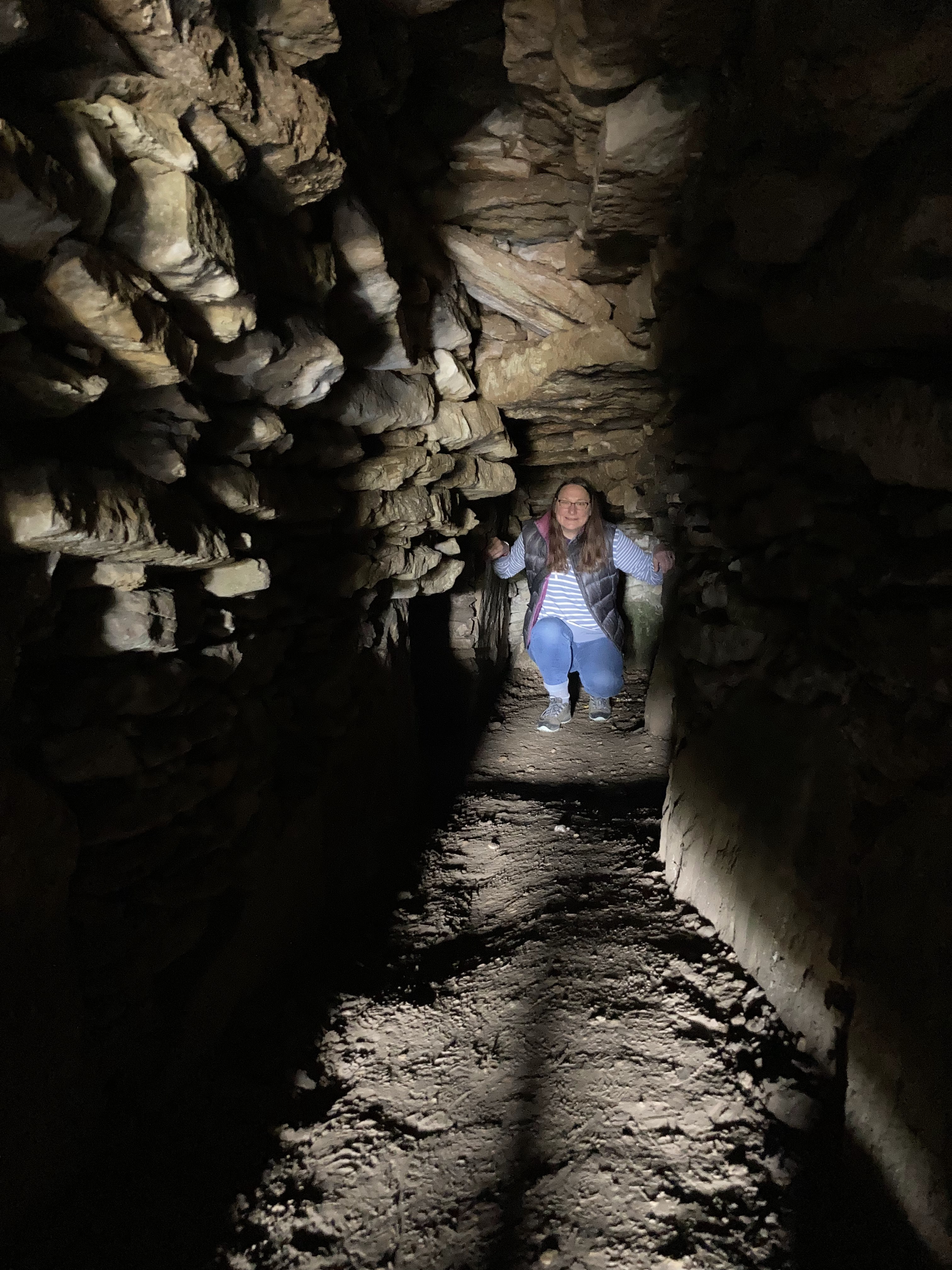
Stanydale Temple
Parking at the pull we walked out across the marshy moorland past the Neolithic farmhouses, and the ghosts of field systems. Overhead the passing of birds splitting the sky: Curlew (Numenius arquata), Raven (Corvus corax), Greylag Goose (Anser anser); Meadow Pipit (Anthus pratensis) flighting ahead of us.
The soft distant “plew plew” of a Golden Plover (Pluvialis apricaria), and the whizz of a Snipe (Gallinago gallinago) as it flushed at our approach. A covey of six Red Grouse (Lagopus lagopus) calling long enough for us to spot them amongst the low-lying Heather (Calluna vulgaris).

 |
| Neolithic farmhouse with windbreak at doorway |
 |
| Stanydale Temple from entrance |
 |
| within the Temple |
 |
| standing stones adjacent to Temple |
 |
| Neolithic field system? |
 |
| Heath Waxcap (Hygrocybe laeta) |
After exploring Stanydale, we drove a short distance south and took a walk out to the remains of Culswick Broch, our route passing the Wesleyan Methodist Church built in 1893.
 |
| Wesleyan Methodist Church |
In wet path side flushes a handful of Round-leaved Sundew (Drosera rotundifolia) were noted; Waxcaps (Hygrocybe sp.) were plentiful in places (see Addendum).
 |
| Round-leaved Sundew |
 |
| Vermillion Waxcap (<i>Hygrocybe Cf minitia</i>) |
A scattering of Devil’s-bit Scabious (Succisa pratensis) nodding their delicate blue flowerheads in the breeze.
 |
| Devil's-bit Scabious |
The Broch is constructed of both red and white Granite – and the triangular block acting as the lintel for the south-east facing entrance passage – stands out impressively as you approach the site.

 |
| Culswick Broch |
Before heading back to Lerwick, we took a small detour via Bridge of Walls, joining the A971 and visiting: The Silly Sheep Fibre Company
Spending the best part of an hour with the Proprietor, we learnt about the production of wool, which is grown on site, by the Shetland sheep; then harvested, before being sent to Yorkshire for spinning and dyeing. The finished product is then returned to the Croft. The wool for the Shetland Tweed which we purchased having taken an additional journey to Skye for weaving into tweed.
A flock of Ca. 40 Rock Dove (Columba livia) was a great drive-by find – the birds roosting in a quarry near Tingwall, on the way back to Lerwick.
Reading
Fojut, N. (1993) A Guide to Prehistoric and Viking Shetland The Shetland Times Ltd, Lerwick, Shetland
Stewart, J. (2008) An Outline of Shetland Archaeology Shetland Amenity Trust
Turner, V. (1998) Ancient Shetland Shetland Amenity Trust / B.T. Batsford Ltd, London
Addendum
Whilst the phone App (Obsidentify) identified the waxcaps confidently as Vermillion Waxcap the submission of the record has yet to be verified on iRecord.